
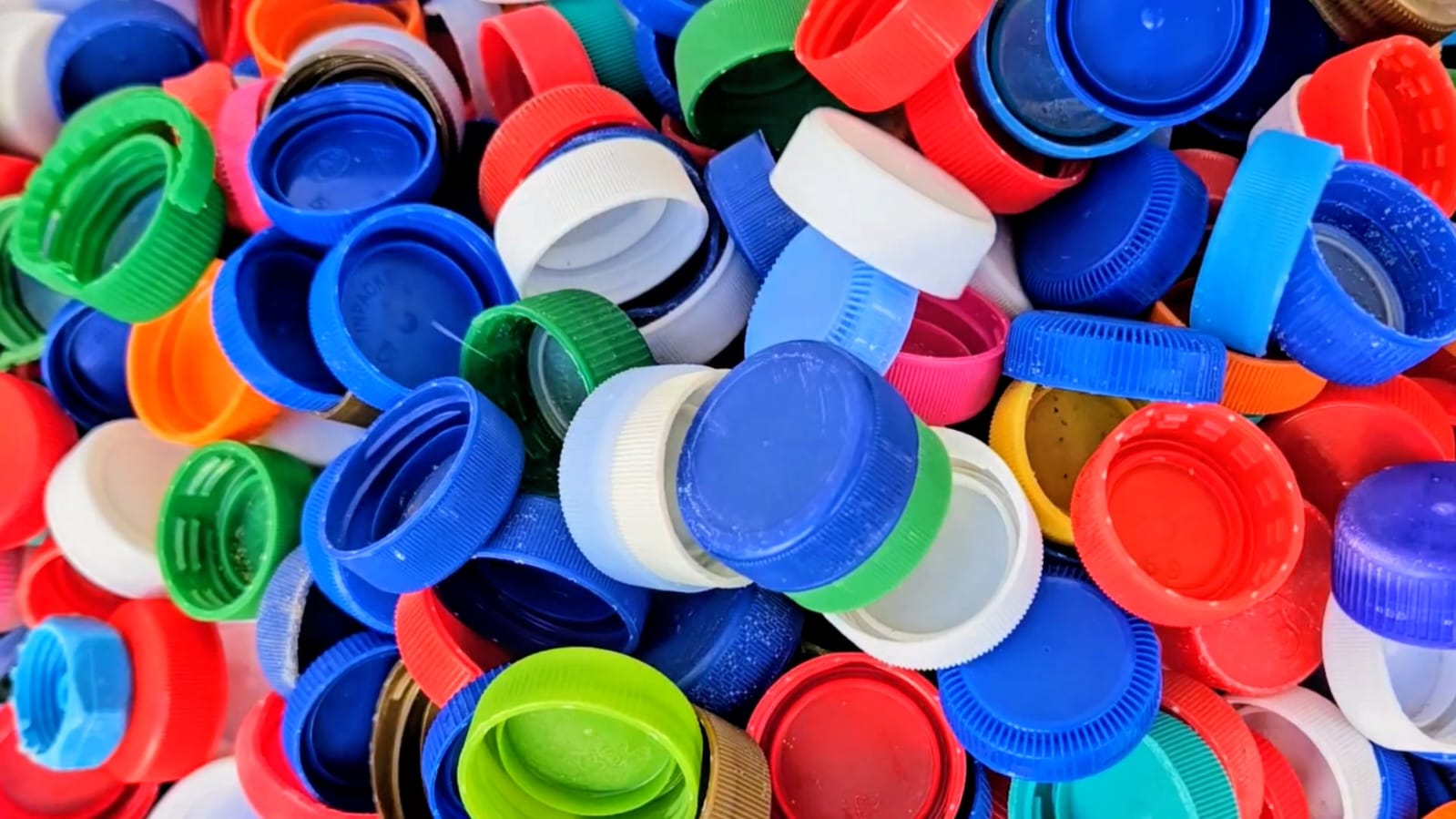
A bottle cap weighs a few grams and lasts only as long as the bottle it seals. Then it heads down one of two roads: it gets lost in nature, or it becomes raw material again. We followed the second road, from bottle cap to stool. Along the way, the cap passes through many hands, follows strict laws of physics, and leaves a trail we want to be able to prove.
A hot summer day, a bottle of water
It's noon, and it's hot. A bottle of water is gone in a few gulps, and the cap drops — onto a beach, into a gutter, under the pines in a forest. A few grams of plastic, used for a few minutes, then left behind. Many stay right where they fell. Ours got lucky: someone picked it up.
Yet this tiny object raises every big question in recycling. What is it made of? Who collects it? What can it become? And how do you prove it? A cap only becomes waste if its journey stops there. Melt it down, and it becomes recycled plastic, a material in its own right.
The number in the triangle
Flip over a cap or a bottle, and you'll usually find a small triangle with a number inside, molded right into the plastic. This resin identification code was introduced in 1988 by the Society of the Plastics Industry, the U.S. plastics trade group. It runs from 1 to 7, according to Designing Buildings, and tells you which family of plastic you're holding.
| Code | Family | Where you find it |
|---|---|---|
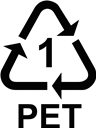 | PET, polyethylene terephthalate | Water and soda bottles, cooking oil bottles |
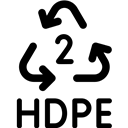 | HDPE, high-density polyethylene | Water bottle caps, milk jugs, laundry detergent and shampoo bottles |
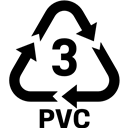 | PVC, polyvinyl chloride | Pipes, window frames, electrical cables |
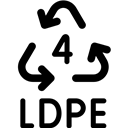 | LDPE, low-density polyethylene | Grocery bags, plastic wrap |
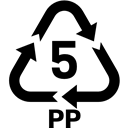 | PP, polypropylene | Cups, food trays, some caps |
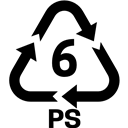 | PS, polystyrene | Yogurt cups, disposable coffee cups, foam trays |
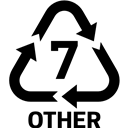 | Other plastics | Polycarbonate water cooler jugs, multilayer packaging, mixed plastics |
That number shapes everything that follows, and the reason is physical: each family has its own melting point. Melt two families together and they don't blend well, leaving a material that's less uniform and more brittle. That's why each family has its own recycling stream. Our cap is no exception.
Out of our hands: collecting, sorting, washing, and grinding
Once it's tossed, our cap's journey begins. None of the next steps happen at our facility, but they determine the quality of everything we make.
How plastic travels, from waste to finished piece
Plaskito comes in after sorting, at its own production facility
- After useBottles, caps, discarded packaging
- CollectionBarbéchas, Eco-Lef public system
- SortingSeparation by plastic family
- Washing and grindingFlakes, sometimes remelted into pellets
- Plaskito production facilityTransform, shape, trace
- ObjectDecorative objects, small furniture
Upstream of PlaskitoCollectors, sorting centers, and recyclers
If the piece comes back at the end of its life
Four steps take place before the material reaches our facility. Turning it back into raw material at the end of its life only happens if the piece comes back.
Collect. In Tunisia, there's a good chance a barbécha, one of the country's informal waste pickers, will pick up our cap before the garbage truck comes by. There may be as many as 10,000 of them, recovering about 70,000 metric tons of plastic a year, according to the head of Tunisia's National Waste Management Agency, as quoted by La Presse de Tunisie in January 2025. Eco-Lef, the country's public collection program, buys back part of that packaging and divides it among licensed recyclers, according to the Heinrich Böll Foundation.
Sort. At the sorting center, packaging is separated by family and pressed into bales. This is where the value of the entire chain gets set. A clean batch of a single family melts into a consistent, predictable material. A mixed batch turns into something brittle that's only good for less demanding uses — if it isn't rejected outright. A sorting mistake here shows up later, in the strength of a finished piece.
Wash and grind. At the recycler, the material is shredded into flakes, then washed to strip off labels, glue, and residue. This is where the bottle and its cap finally part ways, and no one has to lift a finger: a tank of water does the job. The cap's polyethylene is lighter than water (0.91 to 0.97 g/cm³), so it floats. The bottle's PET is heavier (1.34 to 1.39 g/cm³), so it sinks.
Reprocess. The flakes are either sold as is, as regrind, or melted into pellets, small uniform beads that manufacturers use as raw material. By now, the cap looks nothing like a cap: it has become material. It reaches us in one of these two forms. The bottle, meanwhile, heads off to the PET stream.
Inside our facility: the day the cap becomes material again
Our story with this plastic began in 2024, with caps and polyethylene packaging that we heated into a first prototype, good-looking and sturdy. Two years of testing followed. Today, our material comes from industrial and post-consumer waste supplied by Tunisian recyclers and manufacturers. It arrives already ground or pelletized.
Transform. The sorting done upstream sets the melting point, since each family has its own. We shape the material through compression molding: it's heated, then pressed in a mold. The thicker the piece and the more material it takes, the longer the press time. Our settings, refined over two years of testing, remain proprietary.
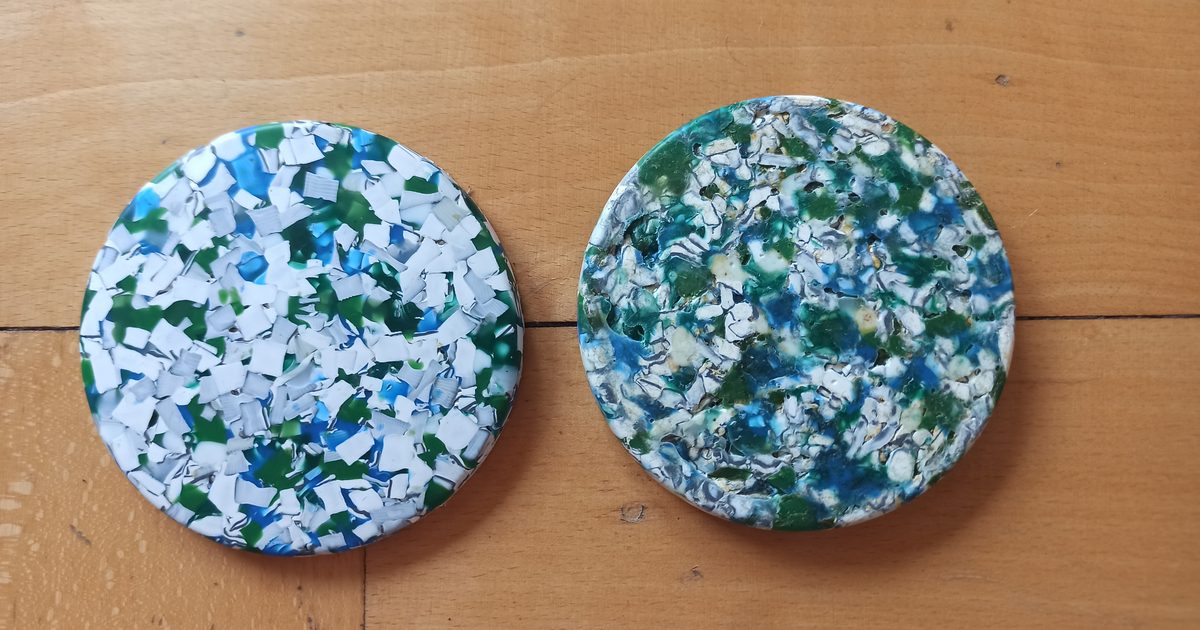
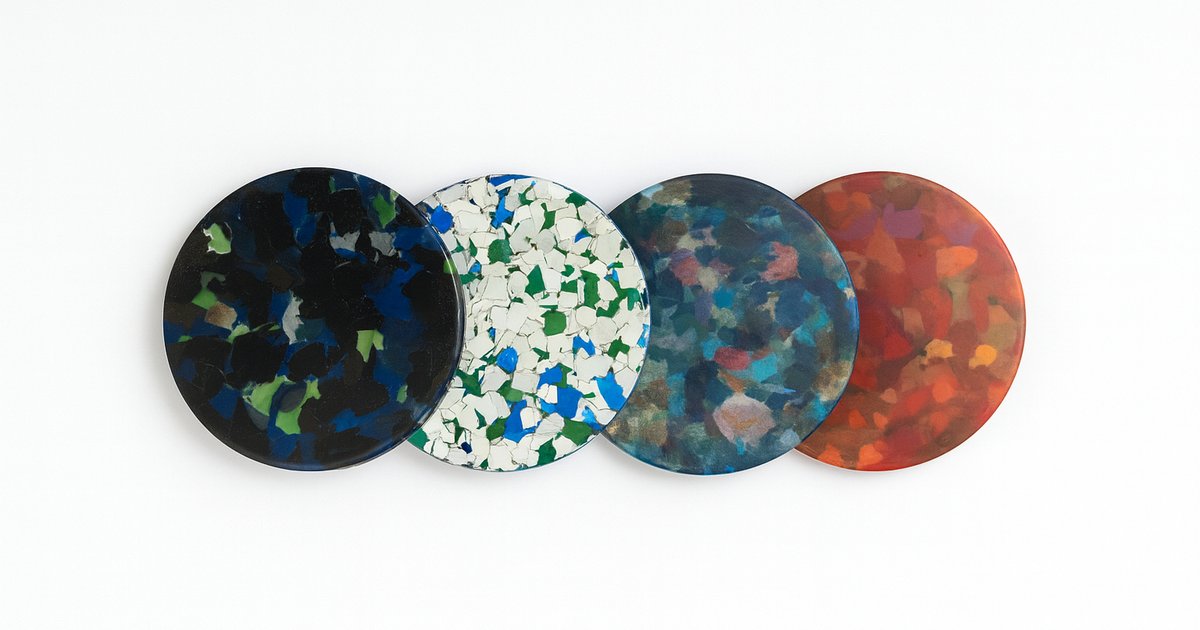
Shape. The material comes out as boards. Like wood, they can be cut, drilled, screwed together, and engraved, and they can also be thermoformed, or bent into shape with heat. We always use sharp mechanical tools, never lasers, since the heat would melt the plastic. A piece designed to last and made from a single plastic family can one day become raw material again. For scale: a coaster weighs 50 grams (just under 2 ounces), about 10 bottle caps; a stool weighs 3.5 kilograms (about 7.7 pounds), about 700 bottle caps.
Trace. From the moment we collect the regrind from our supplier, every step is automatically recorded on a blockchain, where nothing can be altered. That record is the foundation for the digital product passport we're developing: buyers will be able to see where the material in their piece came from.
What happens next?
Our cap is now part of a stool. To close the loop, that stool will have to become raw material again someday instead of ending up lost. Because it's made from a single plastic family, it can be ground up and remelted in turn.
Frequently asked questions
What do the numbers in the triangle mean?
It's the resin identification code, used since 1988. It runs from 1 to 7: 1 for PET, 2 for HDPE, 3 for PVC, 4 for LDPE, 5 for polypropylene, 6 for polystyrene, and 7 for everything else. It identifies the plastic family, but it doesn't guarantee the packaging will be recycled where you live.
Why can't all plastics be melted down together?
Because each family has its own melting point: about 230°F (110°C) for LDPE, 266°F (130°C) for HDPE, 329°F (165°C) for polypropylene, and 482°F (250°C) for PET. At the temperatures used to process polyethylene, PET stays solid and leaves hard bits in the piece. And even when they do melt together, most plastics don't mix: they separate into weakly bonded zones, and the piece cracks along those boundaries.
Should I take the cap off before tossing the bottle?
In the European Union, where caps have had to stay tethered to bottles since July 2024, no. Left on, the cap is collected with the bottle and separated at the recycler, where it floats and the bottle sinks. Elsewhere, follow your local recycling guidelines.
Does Plaskito recycle waste itself?
No. Collection, sorting, and grinding are handled by others. Our facility starts with material that's already been sorted, then transforms it, shapes it, and keeps a record of where it's been.
Sources
- Designing Buildings, Resin Identification Code: codes 1 to 7 and uses of each family.
- UFC-Que Choisir, “Bouchons solidaires,” March 29, 2025: what caps are made of, separation by flotation.
- Techno-Science, definition of polyethylene: melting point.
- Wikipedia, HDPE, LDPE, and PET entries, accessed October 31, 2026: densities.
- La Presse de Tunisie, January 10, 2025: number of barbéchas, tonnage collected.
- Heinrich Böll Foundation, Plastic Waste Management in Tunisia, October 5, 2020: the Eco-Lef system.
- L'Info Durable, the stages of plastic recycling, February 11, 2022: sorting, grinding, washing, pellets.